Hospital Compliance: Ensuring Regulatory Requirements for Hospitals



In the ever-evolving healthcare landscape, hospital compliance plays a critical role in maintaining the integrity and quality of patient care. A well-implemented hospital compliance program is crucial to ensure that hospitals adhere to regulatory requirements set forth by the government. We will explore the significance of hospital regulatory compliance and highlight the measures private hospitals can take to achieve and maintain compliance.

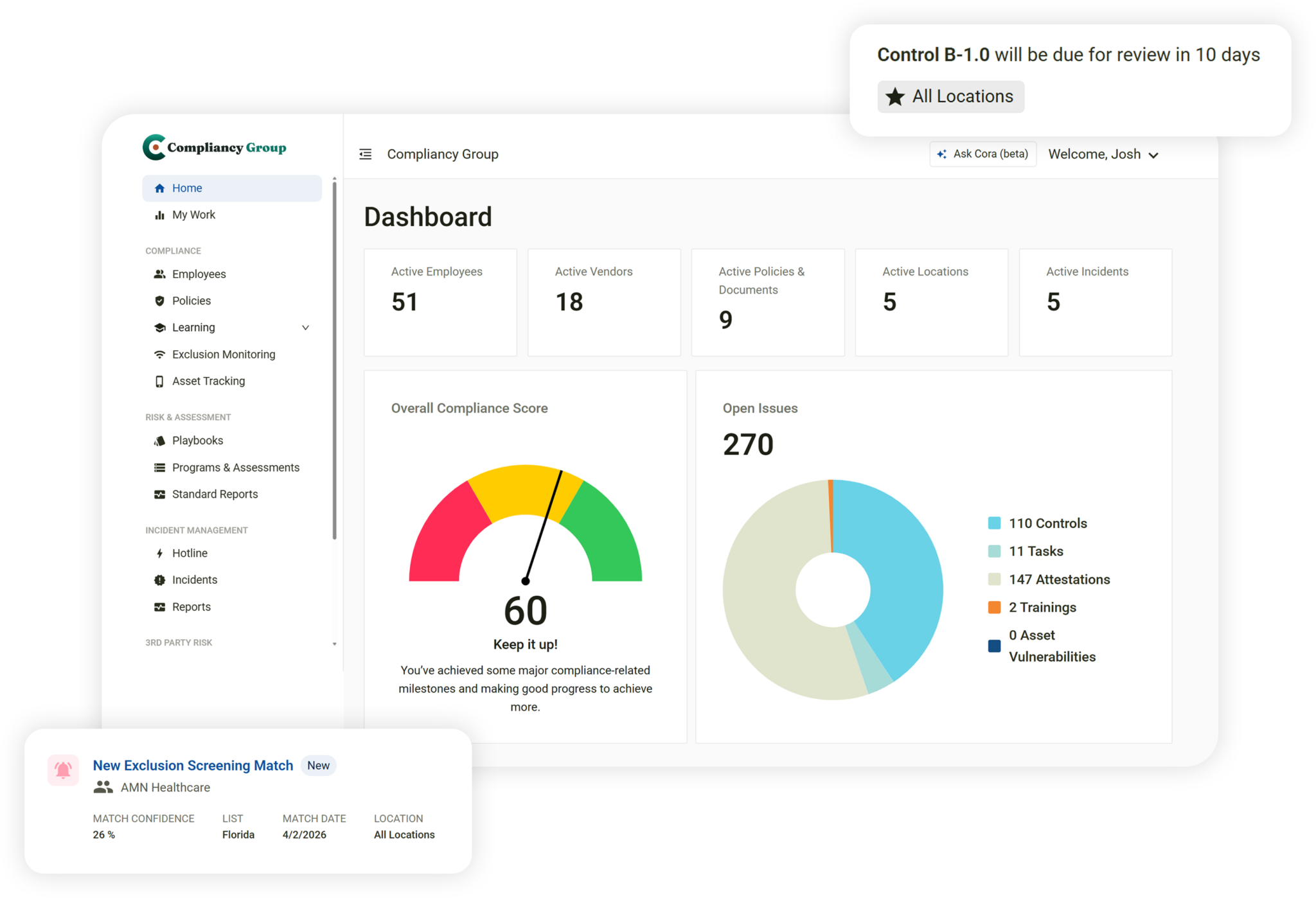

Understanding Hospital Compliance: Regulatory Requirements for Hospitals
Hospital compliance refers to the adherence to laws, regulations, and standards set by government agencies and accreditation bodies.
These regulations are designed to:
- Protect Patients PHI
- Ensure Safety
- Promote Ethical Practices
Hospital compliance programs provide guidelines – policies and procedures – that help to meet these requirements.
The Importance of Hospital Compliance Programs: Keeping Patients Safe
A robust hospital compliance program is essential for several reasons:
- Ensures patient safety by promoting best practices in clinical care and infection control.
- Protects hospitals from legal repercussions such as fines or penalties resulting from noncompliance with regulatory requirements for hospitals.
- Enhances a hospital’s reputation among patients, staff, and stakeholders by demonstrating its commitment to ethical conduct and high-quality care.
Elements of a Successful Hospital Compliance Program
To establish an effective hospital compliance program, various elements must be considered.
1. Conducting Regular Risk Assessments
By conducting regular risk assessments, hospitals can identify potential areas of non-compliance. By assessing these risks proactively, hospitals can implement appropriate controls to mitigate them effectively.
2. Developing Comprehensive Policies & Procedures
Developing comprehensive policies and procedures that align with regulatory requirements for hospital compliance is essential. Clear guidelines ensure that all staff members understand their responsibilities regarding compliance-related matters. Regular training sessions should be conducted to educate employees about these policies and keep them updated on any changes in regulatory requirements for hospitals.

3. Monitoring & Auditing
Monitoring and auditing processes are crucial when maintaining hospital regulatory compliance. Regular internal audits allow hospitals to assess their performance against established guidelines, identify gaps, and take corrective actions promptly.
4. Collaboration Between Departments
Collaboration between departments is vital in achieving hospital compliance. Effective communication and coordination ensure that all areas of the hospital function in accordance with established policies and procedures
Private Hospital Compliance: Challenges and Solutions
Private hospitals face unique challenges when it comes to regulatory compliance. Compared to public institutions, private hospitals often have limited resources and must navigate complex regulations without the same level of government support.
However, several solutions for maintaining private hospital compliance can overcome these challenges.
1. Partnering with Healthcare Consulting Firms/Experts in Hospital Compliance
Partnering with healthcare consulting firms or experts in the hospital compliance space can provide valuable support. These professionals have extensive knowledge of regulatory requirements for hospitals and can help streamline private hospital compliance to meet all necessary standards.
2. Leveraging Technology
Leveraging technology can significantly assist private hospital compliance goals, through:
- Digital Systems for Documentation
- Record-Keeping
- Monitoring
This can enhance efficiency while maintaining accuracy and accountability. Automation tools also enable real-time tracking of compliance-related tasks, reducing the likelihood of oversight or delays.
3. Establishing a Culture of Compliance
This is crucial within private hospitals. Establishing a culture of compliance fosters a sense of responsibility among staff members at all levels by promoting ethical behavior and accountability. Regular training sessions should reinforce the importance of adherence to regulations and encourage employees to report any concerns or potential violations they may encounter.
Achieving Hospital Compliance
Ultimately, hospital compliance plays a critical role in upholding patient safety, ensuring high-quality care, and protecting hospitals from legal repercussions. Private hospitals face specific challenges in achieving regulatory compliance but can overcome them through proactive measures such as:
- Partnering with industry leaders
- Leveraging technology solutions
- Fostering a culture of compliance
By prioritizing hospital compliance programs, healthcare organizations contribute to an environment where patients receive the best possible care while meeting the expectations set forth by regulatory bodies.