A strong hospital incident report policy is essential for keeping patients safe and ensuring quality of care. Every day, hospitals face potential incidents ranging from medication errors to equipment failures, and having the right policies and systems in place helps us learn from these events instead of making the same mistakes again.
Learn how to develop an effective hospital incident report policy, implement an incident reporting system in hospitals, and how modern hospital incident reporting software can transform your compliance efforts.
What is a Hospital Incident Report Policy?
A hospital incident report policy is a formal set of guidelines that establishes the procedures, protocols, and expectations for documenting and responding to adverse events within a healthcare facility. This policy outlines how staff members should identify reportable incidents, whom they should notify, and the steps required to investigate and resolve each event.
An effective incident report policy serves multiple critical functions. It provides clear definitions of what constitutes a reportable incident, establishes a non-punitive reporting culture that encourages transparency, defines roles and responsibilities for all staff members, outlines timeframes for reporting and investigation, and ensures compliance with regulatory requirements including HIPAA, Joint Commission standards, and state regulations.
Types of Healthcare Incidents Requiring Reports
Not all incidents in healthcare settings result in patient harm, but they all provide valuable learning opportunities. Healthcare incident reports typically fall into several critical categories:
Near-Miss Incidents: Events where potential harm was narrowly avoided. These might include catching a medication labeling error before administration or preventing a patient fall through timely intervention. Near-misses are invaluable for identifying system vulnerabilities before actual harm occurs.
No-Harm Incidents: Errors or deviations from standard care protocols that reach the patient but cause no discernible injury. While no immediate harm resulted, these incidents highlight risks that could lead to serious consequences if left unaddressed.
Adverse Events: Incidents that result in patient harm, regardless of whether the harm was preventable. This category includes everything from minor injuries to serious complications requiring additional treatment.
Sentinel Events: The most serious category, these are unexpected occurrences involving death or serious physical or psychological injury. The Joint Commission requires root cause analysis for all sentinel events.
HIPAA Security Incidents and Breaches: Any unauthorized access, use, or disclosure of protected health information (PHI) must be documented and evaluated. This includes lost or stolen devices containing PHI, unauthorized employee access to patient records, phishing attacks or ransomware incidents, improper disposal of patient information, and misdirected emails or faxes containing PHI. Under HIPAA regulations, covered entities must conduct risk assessments to determine if a security incident constitutes a reportable breach.
Fraud, Waste, and Abuse (FWA): Healthcare organizations must report suspected instances of fraud, waste, and abuse that could impact Medicare, Medicaid, or other federal healthcare programs. FWA incidents include billing for services not rendered, upcoding or unbundling of services, accepting or offering kickbacks for referrals, duplicate billing, and medically unnecessary services. These incidents often require reporting to the Office of Inspector General (OIG) or applicable state agencies.
OSHA-Reportable Workplace Injuries: The Occupational Safety and Health Administration requires healthcare facilities to report work-related injuries and illnesses. OSHA-reportable incidents include needlestick injuries and exposure to bloodborne pathogens, workplace violence resulting in injury, slips, trips, and falls causing injury, musculoskeletal injuries from patient handling, and chemical or hazardous substance exposures. Healthcare facilities must maintain OSHA injury and illness logs and report fatalities within 8 hours and hospitalizations within 24 hours.
Key Components of an Effective Hospital Incident Report Policy
Creating a comprehensive hospital incident report policy requires careful attention to several essential elements that work together to foster a culture of safety and continuous improvement.
Clear Incident Definitions and Scope
Your policy must explicitly define what constitutes a reportable incident within your organization. Ambiguity is the enemy of effective reporting. Research shows that 62 percent of hospital incidents go unreported because staff members don’t consider them reportable due to unclear requirements.
Include specific examples of reportable events such as medication errors, patient falls, equipment malfunctions, security breaches involving protected health information, workplace injuries, unexpected patient deaths, surgical complications, and delays in treatment or diagnosis.
Non-Punitive Reporting Culture
The single most critical element of any incident reporting system in hospitals is establishing a “just culture” that focuses on system improvement rather than individual blame. Staff members who fear retribution for reporting mistakes will simply stop reporting, leaving your organization blind to preventable risks.
Your policy should explicitly state that reporting is encouraged and expected, that disciplinary action will not result from good-faith reporting, that the focus is on identifying system failures rather than individual fault, and that anonymous reporting options are available when appropriate.
Reporting Procedures and Timeframes
Specify exactly how incidents should be reported, including the reporting channels available (electronic forms, phone hotline, direct supervisor notification), required timeframes for initial reporting (typically within 24 hours of discovery), and who must be notified for different types of incidents.
For HIPAA-related incidents specifically, your policy must align with federal breach notification requirements. Breaches affecting 500 or more individuals must be reported to the Department of Health and Human Services within 60 days, while smaller breaches can be reported annually.
Investigation and Root Cause Analysis
Your policy should outline the process for investigating reported incidents. Not every incident requires the same level of scrutiny, but your policy should define which incidents trigger formal investigation, who conducts these investigations, what methodologies will be used, and how long investigations typically take.
Many organizations implement a tiered approach based on severity, with minor incidents receiving basic review while serious events undergo comprehensive root cause analysis using frameworks like the fishbone diagram or Swiss cheese model.
Corrective Action and Follow-Up
Reporting and investigating incidents means nothing without action. Your policy must establish clear expectations for implementing corrective measures based on investigation findings, assigning accountability for action items, setting timelines for completion, and conducting follow-up assessments to verify effectiveness.
Documentation and Record Retention
Proper documentation serves both compliance and quality improvement purposes. Your hospital incident report policy should specify what information must be captured in incident reports, how long records must be retained, who has access to incident reports, and how confidentiality is protected.
Keep in mind that incident reports are internal quality improvement documents and should never be included in the patient’s medical record or shared with patients and families without guidance from your legal counsel.
Implementing an Incident Reporting System in Hospitals
While a well-written policy provides the framework, successful incident reporting requires the right technological infrastructure. Modern incident reporting systems in hospitals have evolved far beyond paper forms and manual filing systems.
The Evolution from Paper to Digital Systems
Traditional paper-based incident reporting creates numerous barriers to effective safety management. Forms get lost, handwriting is illegible, routing is delayed, data analysis is nearly impossible, and trend identification requires manual review of hundreds of reports.
Digital incident reporting systems eliminate these inefficiencies by providing centralized data collection, automated routing to appropriate reviewers, real-time visibility into incident status, advanced analytics for trend identification, and integration with other compliance systems.
Essential Features of Hospital Incident Reporting Software
When evaluating hospital incident reporting software, look for these critical capabilities:
Customizable Report Forms: Every healthcare organization has unique needs. Your software should allow you to create unlimited custom forms tailored to different incident types such as clinical events, workplace injuries, HIPAA violations, and equipment failures.
Automated Workflow and Routing: The right software automatically routes incidents to appropriate personnel based on type, severity, and other criteria. This eliminates delays and ensures the right people are involved from the start.
Anonymous Reporting Options: To truly encourage reporting, your system must offer anonymous submission options that still allow for follow-up investigation when needed.
Risk Assessment and Analysis Tools: Beyond simple data collection, your software should help you identify patterns, assess risk levels, track corrective actions, and generate comprehensive reports for leadership and regulatory bodies.
Integration Capabilities: Your incident management system shouldn’t exist in isolation. Look for software that integrates with your learning management system for targeted training, policy management system for updating procedures based on lessons learned, and compliance dashboards for unified risk visibility.
Training Staff on Incident Reporting
Even the best policy and technology will fail without proper staff education. Your training program should cover what constitutes a reportable incident, how to access and use your reporting system, the importance of timely and accurate reporting, and confidentiality and legal considerations.
Training should occur during new employee orientation and through annual refresher courses for all staff. Consider using real examples from your organization’s incident history to illustrate why reporting matters and how it leads to tangible safety improvements.
How The Guard by Compliancy Group Simplifies Incident Management
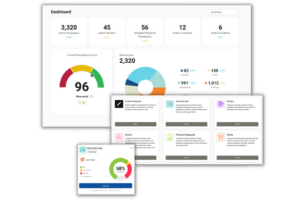
Compliancy Group’s incident management software, The Guard, provides healthcare organizations with a complete solution for managing every aspect of incident reporting, from initial documentation through resolution and analysis.
Comprehensive Incident Reporting Capabilities
The Guard offers a robust set of tools designed specifically for healthcare compliance needs. The platform provides expedited incident reporting with ticketing and tracking capabilities, effective response management with evidence collection and logging, approval workflows that assign appropriate staff to oversee incidents, advanced routing through a sophisticated ticketing system, and comprehensive risk analysis to identify and monitor compliance risks across all facilities.
Supporting Multiple Incident Types
Unlike generic incident management tools, The Guard is built for healthcare compliance. The system supports reporting of all incident types relevant to healthcare organizations including HIPAA security incidents and breaches, patient safety events, workplace injuries and OSHA-reportable events, medical equipment failures, and regulatory violations.
This unified approach means your staff learn one system rather than juggling multiple platforms for different types of incidents.
Streamlined Compliance Workflows
The Guard integrates incident management with Compliancy Group’s broader compliance platform, creating synergies that standalone incident reporting software cannot match. When an incident reveals a gap in staff knowledge, The Guard connects to training modules. When investigation uncovers a policy deficiency, updates can be drafted, approved, and distributed through the same platform. When risk analysis identifies concerning trends, compliance dashboards provide leadership with actionable insights.
HIPAA-Specific Incident Response
HIPAA compliance adds an extra layer of complexity to incident management. Security incidents must be documented according to federal requirements, breaches must be reported within strict timeframes, risk assessments must follow specific frameworks, and documentation must be maintained for at least six years.
The Guard simplifies HIPAA incident response by providing templates aligned with federal requirements, automated workflows that ensure timely breach notification, risk assessment tools built on HIPAA frameworks, and secure documentation that meets retention requirements.
Best Practices for Hospital Incident Report Policy Implementation
Creating and implementing an effective hospital incident report policy requires more than good intentions. These proven strategies will help your organization build a robust incident management program.
Start with Leadership Buy-In
Safety culture flows from the top. Leadership must visibly support incident reporting through regular communication about its importance, allocation of resources for investigation and corrective action, recognition of staff who report incidents, and transparency about lessons learned and changes implemented.
When frontline staff see that leadership takes incidents seriously and acts on their reports, reporting rates increase dramatically.
Make Reporting Easy and Accessible
Every barrier to reporting reduces the likelihood that incidents will be documented. Streamline your process by ensuring the reporting system is accessible 24/7 from any device, keeping forms concise and focused on essential information, providing clear instructions and examples, and offering multiple reporting channels including anonymous options.
The easier you make reporting, the more comprehensive your incident data will be.
Provide Timely Feedback
One of the most common complaints from healthcare staff is that they report incidents and never hear what happened. This feedback vacuum discourages future reporting and undermines the entire system.
Close this loop by acknowledging receipt of all incident reports within 24 hours, providing status updates throughout the investigation process, sharing outcomes and corrective actions taken (while maintaining appropriate confidentiality), and communicating system-wide changes resulting from incident analysis.
Use Data to Drive Improvement
Incident reports are only valuable if they inform action. Regularly analyze your incident data to identify high-risk areas requiring intervention, assess the effectiveness of previous corrective actions, allocate resources to address systemic issues, and track progress toward safety goals.
Advanced hospital incident reporting software like The Guard makes this analysis straightforward with built-in analytics and customizable reporting.
Conduct Regular Policy Reviews
Your incident report policy should be a living document that evolves with your organization and the regulatory landscape. Schedule annual reviews to assess whether current definitions and procedures remain appropriate, evaluate if reporting rates indicate effective culture or potential gaps, determine if investigation processes are yielding actionable insights, and confirm alignment with current regulatory requirements.
Measuring Success: Key Metrics for Hospital Incident Reporting Programs
How do you know if your hospital incident report policy is effective? Track these key performance indicators:
Reporting Rate
Monitor the number of incidents reported per 1,000 patient days or full-time employees. An increase in reporting typically indicates growing trust in the system and better identification of safety risks, not necessarily declining safety.
Time to Report
Track the lag between when incidents occur and when they’re reported. Shorter intervals typically yield more accurate information and enable faster intervention.
Time to Resolution
Measure how long it takes to investigate incidents and implement corrective actions. Extended resolution times may indicate resource constraints or process inefficiencies.
Corrective Action Completion Rate
Track what percentage of planned corrective actions are actually implemented within established timeframes. Low completion rates suggest accountability gaps.
Repeat Incidents
Monitor whether similar incidents occur after corrective actions are implemented. Persistent repeat incidents may indicate that root causes aren’t being adequately addressed.
Regulatory Compliance Considerations
Your hospital incident report policy must align with numerous regulatory requirements. Key frameworks include:
HIPAA Requirements
The HIPAA Security Rule requires policies and procedures to address security incidents, including identification and response to suspected incidents, mitigation of harmful effects, and documentation of incidents and their outcomes. The Breach Notification Rule mandates specific timeframes and procedures for reporting breaches of unsecured protected health information.
Joint Commission Standards
The Joint Commission requires healthcare organizations to maintain an internal reporting system for patient safety events, conduct proactive risk assessments, analyze sentinel events through root cause analysis, and implement corrective action plans.
State Regulations
Many states have additional incident reporting requirements beyond federal law. Ensure your policy addresses all applicable state mandates, which may include mandatory reporting of specific events to state health departments, shorter notification timeframes for certain incidents, and additional documentation requirements.
Common Challenges and Solutions
Even well-designed incident reporting programs face obstacles. Here’s how to address common challenges:
Low Reporting Rates
If staff aren’t reporting incidents, focus on reinforcing the non-punitive culture, simplifying the reporting process, providing regular feedback on reported incidents, and sharing success stories where reporting led to meaningful improvements.
Incomplete or Inaccurate Reports
When reports lack critical details, consider redesigning forms to better prompt essential information, providing training on effective incident documentation, implementing required fields for key data points, and conducting quality reviews with constructive feedback.
Investigation Delays
If investigations drag on, clarify roles and responsibilities for incident review, set clear timeframes and accountability, allocate sufficient resources for timely investigation, and use technology to automate routing and reminders.
Failure to Implement Corrective Actions
When corrective actions remain incomplete, ensure executive leadership tracks action item completion, assign clear ownership for each corrective measure, integrate action items into performance evaluations, and regularly report progress to governance committees.
The Future of Incident Reporting in Healthcare
Healthcare incident management continues to evolve with technology and our understanding of patient safety. Emerging trends include:
Artificial Intelligence and Predictive Analytics
Advanced systems are beginning to use AI to identify patterns that humans might miss, predict high-risk situations before incidents occur, and suggest targeted interventions based on historical data.
Integration with Clinical Systems
Future incident reporting systems will likely integrate more deeply with electronic health records, automatically flagging potential safety concerns from clinical data and creating seamless workflows for incident documentation.
Real-Time Reporting and Response
Mobile technology and push notifications enable immediate reporting and faster response times, reducing the gap between incident occurrence and intervention.
Enhanced Benchmarking
As more organizations use standardized digital reporting systems, comparative analytics will improve, allowing healthcare facilities to benchmark their safety performance against similar organizations and identify opportunities for improvement.
Taking Action: Implementing Your Hospital Incident Report Policy
Whether you’re creating your first formal incident report policy or revising an existing program, start with these practical steps:
- Assess Current State: Review your existing incident reporting processes, analyze reporting rates and patterns, and gather feedback from staff about barriers to reporting.
- Draft or Revise Policy: Incorporate the essential elements outlined in this guide, ensure alignment with all applicable regulations, and engage frontline staff in the review process.
- Select or Upgrade Technology: Evaluate your current incident reporting system against best practice requirements, consider comprehensive solutions like The Guard that integrate incident management with broader compliance needs, and ensure your chosen platform offers the customization and analytics capabilities your organization needs.
- Train Your Team: Develop comprehensive training materials, conduct organization-wide education on the new or revised policy, and provide hands-on practice with any new technology.
- Launch and Monitor: Roll out the new policy and system, closely monitor key metrics in the first 90 days, and gather ongoing feedback to identify areas for refinement.
Building a Safer Healthcare Environment
An effective hospital incident report policy is far more than a compliance checkbox. It’s the cornerstone of a culture that values continuous learning, transparency, and patient safety above all else.
By establishing clear expectations for incident reporting, implementing user-friendly technology like The Guard by Compliancy Group, and fostering an environment where staff feel empowered to speak up without fear, your organization can transform incidents from hidden liabilities into opportunities for meaningful improvement.
The healthcare landscape continues to evolve, with increasing regulatory complexity and rising patient expectations. Organizations that invest in robust incident reporting systems and hospital incident reporting software position themselves not just to meet minimum compliance requirements, but to lead in patient safety and quality care delivery.
Remember that effective incident management is a journey, not a destination. Regularly assess your hospital incident report policy, stay current with regulatory changes, listen to your staff, and let data guide your continuous improvement efforts.
With the right policy framework, supportive culture, and powerful tools like The Guard, your organization can create an environment where every incident becomes an opportunity to learn, improve, and ultimately provide safer, higher-quality care to every patient you serve.