Healthcare organizations are under siege. In 2024, 88% of healthcare workers opened phishing emails, and attacks on healthcare increased by 32%. With the average healthcare data breach now costing $9.77 million, effective phishing training for employees isn’t optional—it’s essential for survival.
This guide reveals how comprehensive phishing awareness training for employees transforms your workforce into your strongest defense, with insights on how Compliancy Group’s training platform, The Guard, delivers measurable results for healthcare organizations.
Why Employee Phishing Training Matters in Healthcare
Phishing topped the FBI’s 2024 Internet Crime Report with 193,407 complaints. Healthcare organizations are prime targets because they store valuable patient data that sells for up to 50 times more than credit card information on the dark web.
The impact extends beyond finances. Phishing-related breaches cost healthcare organizations an average of $9.77 million per incident. Ransomware attacks cause approximately 17 days of downtime, forcing providers to revert to paper records and delaying critical patient care.
The Human Vulnerability
Approximately 80% of healthcare data breaches involve phishing or social engineering. Cybercriminals know that even the best technology can’t stop every attack—employees remain the most exploitable vulnerability.
Internal issues like human error accounted for 26% of healthcare attacks. Even well-intentioned staff can compromise security without proper training. The good news? Educated employees become your strongest defense.
Understanding Modern Phishing Threats
Today’s phishing attacks are sophisticated and barely resemble the obvious spam of years past. Attackers now use AI-powered tools to create convincing, personalized attacks.
Common Phishing Attack Types
Email Phishing: Attackers impersonate trusted sources like insurance companies, medical suppliers, or executives to steal credentials or install malware.
Spear Phishing: Highly targeted attacks using personalized information to fool specific individuals within your organization.
Whaling: Attacks targeting C-level executives who have access to sensitive data and financial systems. Senior executives are 23% more likely to fall victim to AI-driven, personalized attacks.
Smishing (SMS Phishing): Text message-based attacks tricking employees into clicking malicious links via mobile devices.
Business Email Compromise (BEC): Criminals compromise legitimate email accounts to authorize fraudulent payments or data transfers.
The AI Revolution in Phishing
Since ChatGPT’s launch, phishing attacks have grown by 4,171%. AI now generates perfectly written emails without grammatical errors, creates personalized content based on social media research, and produces convincing impersonations of colleagues and vendors.
Essential Components of Effective Phishing Awareness Training for Employees
Not all training programs work. Research shows that after six months, many employees can’t distinguish phishing emails any better than before training. The difference? Ongoing, comprehensive programs versus one-time annual sessions.
1. Healthcare-Specific Educational Content
Generic training doesn’t resonate with healthcare workers. Effective phishing awareness training for employees must include scenarios involving HIPAA compliance, patient information requests, medical supplier communications, and insurance-related phishing attempts.
Employees should learn to recognize these red flags:
- Suspicious sender addresses with slight misspellings
- Urgent language demanding immediate action
- Unexpected attachments or links
- Requests for sensitive information via email
- Mismatched URLs when hovering over links
- Impersonation of trusted brands or colleagues
2. Clear Reporting Procedures
Awareness without action is worthless. Organizations need simple reporting mechanisms, designated security contacts, no-penalty policies encouraging reporting, and feedback loops informing employees about outcomes.
When employees feel safe reporting potential threats—even if they clicked—you create a culture of security rather than fear.
3. Continuous Learning, Not One-Time Events
The best approach from a risk management perspective is ongoing training. Phishing training modules completed monthly keep security fresh in employees’ minds and adapt to evolving threats.
Short, frequent microlearning modules combined with regular simulations maintain engagement while building long-term behavioral change.
Phishing Awareness Tips: Red Flags Every Employee Should Know
Email Warning Signs
Sender Address Mismatches: The display name says “CEO John Smith” but the email comes from a Gmail account.
Generic Greetings: “Dear valued customer” instead of your actual name indicates mass phishing campaigns.
Urgent or Threatening Language: “Your account will be suspended” or “Immediate action required” creates panic that bypasses logical thinking.
Suspicious Attachments: Unexpected files, especially with double extensions like “invoice.pdf.exe,” often contain malware.
Too-Good-to-Be-True Offers: Free iPads, lottery winnings, or inheritance from unknown relatives are always scams.
Safe Practices for Links and Attachments
Employees should always hover over links before clicking to reveal true destinations, manually type known URLs rather than clicking email links, verify senders through separate communication channels before opening unexpected files, and report suspicious content immediately.
Never open attachments from unknown sources, and always run antivirus scans on downloads from external parties.
How The Guard by Compliancy Group Transforms Healthcare Phishing Training
Understanding phishing is critical, but implementing effective training requires the right tools. Compliancy Group’s training platform, The Guard, delivers comprehensive phishing awareness training for employees specifically designed for healthcare organizations.
Built for Healthcare Compliance
The Guard ensures your training meets HIPAA Security Rule requirements, satisfies OCR risk analysis expectations, provides audit-ready documentation and reporting, and aligns with industry best practices.
OCR is penalizing organizations for failing to conduct thorough, enterprise-wide security risk analyses. The Guard provides the documented training programs that regulators expect during audits.
Engaging, Role-Based Content
The Guard delivers healthcare-specific scenarios employees actually encounter, role-based modules tailored to different positions, interactive content that maintains engagement, and short, digestible lessons respecting busy healthcare schedules.
Employees can earn continuing education credits while completing compliance training, making professional development and security awareness mutually reinforcing.
Advanced Reporting and Analytics
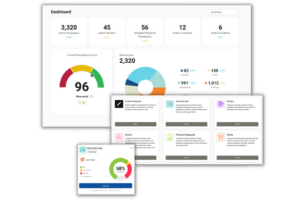
Administrators gain comprehensive visibility through individual progress tracking, completion rates and compliance metrics, identification of high-risk users needing additional support, organization-wide readiness scores, and audit trails documenting all training activities.
This data-driven approach identifies vulnerabilities before attackers exploit them.
Continuous Learning Paths
The Guard delivers continuous education through monthly updated content reflecting current threats, progressive learning paths building expertise over time, regular refreshers on core security concepts, and timely alerts about emerging attack patterns.
Training integrates phishing awareness with broader regulatory compliance including HIPAA Privacy and Security Rules, data breach response procedures, password and access control best practices, and mobile device security—creating a comprehensive security culture.
Implementing Phishing Training: A Practical Roadmap
Step 1: Assess Current Risk
Conduct an initial phishing simulation to establish baseline susceptibility rates, review past security incidents for patterns, and identify high-risk departments or roles.
Step 2: Launch Foundational Training
Begin with education covering what phishing is and why it matters, how to recognize suspicious communications, proper reporting procedures, and the real-world impacts of successful attacks on patient care and organizational finances.
Step 3: Deploy Regular Simulations
Phishing simulations give employees practice identifying threats outside formal training sessions. Start with easier examples and gradually increase difficulty. Vary attack types including email, SMS, and phone calls. Randomize timing to maintain vigilance and provide immediate feedback.
Step 4: Provide Targeted Remediation
When employees fall for simulations, offer just-in-time training explaining what they missed without punishment. Positive reinforcement for those who correctly identify and report threats is equally important.
Step 5: Maintain Continuous Training
Establish a regular training cadence with monthly microlearning modules, quarterly or monthly simulations, updates as new threats emerge, and real-world examples from current news.
Step 6: Measure and Optimize
Track key performance indicators including phishing click-through rates, reporting rates for suspicious emails, training completion percentages, and reoffense rates. Use these metrics to refine your program continuously.
Meeting HIPAA Requirements with Phishing Training
HIPAA’s Security Rule requires covered entities to implement security awareness training for all workforce members. While the rule doesn’t specify exact requirements, phishing training is essential for compliance.
Documentation Requirements
Regulatory compliance demands thorough documentation. The Guard provides training completion records, quiz and assessment scores, simulation results and responses, policy acknowledgments, and remediation training for high-risk users.
This documentation proves due diligence during OCR audits or breach investigations.
Risk Analysis Integration
Having a documented, up-to-date risk analysis is the single most important defensive document when facing regulators. Phishing training must be part of your broader risk analysis strategy, addressing identified vulnerabilities in human factors and demonstrating continuous improvement over time.
When Phishing Succeeds: Incident Response
Despite best efforts, some attacks will succeed. Having a clear incident response plan minimizes damage.
Immediate Containment
When an employee reports clicking a suspicious link or providing credentials, disconnect the affected device from the network, disable compromised accounts immediately, scan for malware, alert the IT security team, and document the incident thoroughly.
Investigation and Communication
Determine what information was accessed, assess whether PHI was compromised, notify appropriate stakeholders including IT security, management, compliance officers, and potentially affected patients, law enforcement, and OCR.
Post-Incident Learning
Every incident provides learning opportunities. Analyze what security controls failed, update training to address the specific tactic used, adjust simulations to include similar scenarios, and strengthen technical controls where possible.
The ROI of Phishing Training
Some executives view security training as a cost center rather than a strategic investment. The numbers tell a different story.
Cost Comparison
The average healthcare breach costs $9.77 million per incident. Even comprehensive training programs cost a fraction of a single breach. When you consider that before training, 32.5% of healthcare employees were fooled by phishing simulations, preventing even one breach delivers enormous ROI.
Beyond Financial Returns
Effective training maintains operational continuity by reducing system downtime, preventing productivity losses during incident response, maintaining patient care without interruption, and preserving staff morale and confidence.
Training also provides regulatory protection by demonstrating due diligence, providing evidence of proactive risk mitigation, and potentially reducing penalties if breaches occur.
Common Training Mistakes to Avoid
One-and-Done Training
Annual sessions don’t create lasting behavior change. Solution: Implement monthly microlearning and regular simulations.
Generic, Non-Healthcare Content
Training using banking examples doesn’t resonate with healthcare workers. Solution: Use healthcare-specific scenarios involving patient information and medical suppliers.
Punishment-Based Approaches
Creating fear of discipline discourages reporting. Solution: Focus on positive reinforcement and learning opportunities.
No Measurement or Optimization
Without tracking metrics, you can’t identify what’s working. Solution: Use platforms like The Guard that provide comprehensive analytics.
The Future of Healthcare Phishing Threats
Understanding emerging trends helps organizations stay ahead.
AI-Powered Evolution
Attackers increasingly leverage AI for convincing personalization, automated targeting at scale, and voice and video deepfakes. In the last year, there were over 100,000 estimated deepfake attacks in the United States alone.
Defensive strategies must evolve with AI-powered threat detection, continuous training on emerging tactics, and emphasis on verification procedures.
Increasing Regulatory Scrutiny
2025 is shaping up as a record year for HIPAA enforcement. OCR continues increasing enforcement activity, particularly targeting organizations lacking proper risk analyses and training programs.
Organizations need documented, comprehensive programs like The Guard provides to satisfy regulatory expectations.
Transform Your Workforce into Your Strongest Defense
The healthcare industry in the U.S. loses more than $3.8 billion annually due to phishing attacks. With 92% of healthcare organizations targeted by cyberattacks, the question isn’t whether you’ll be targeted—it’s whether your employees will recognize the attack before it’s too late.
Phishing training for employees transforms your greatest vulnerability into your strongest asset. When every staff member can identify suspicious emails, verify unexpected requests, and report potential threats immediately, you create a human firewall that complements your technical defenses.
Why Choose The Guard by Compliancy Group
The Guard stands out through healthcare-specific content built by compliance experts, engaging interactive modules that maintain interest, comprehensive reporting for audits and compliance, continuing education credits for healthcare professionals, scalable implementation from small practices to large health systems, and ongoing content updates reflecting current threats.
Organizations using The Guard consistently see improved employee awareness and reporting, reduced click-through rates on phishing simulations, streamlined compliance documentation, and enhanced overall security posture.
Take Action Today
Don’t wait for a breach to invest in your workforce’s security capabilities. The average healthcare breach costs $10.22 million—an investment in comprehensive training delivers returns many times over.
Start building your human firewall today. When your employees become your first line of defense against phishing, you protect your patients, your organization, and your future.