Medical Compliance Management: Ensuring Patient Safety & Regulatory Adherence



As healthcare evolves rapidly, medical compliance is vital in maintaining patient safety and upholding ethical standards. Medical compliance refers to adherence to laws, regulations, and guidelines.


These are set by regulatory bodies such as the Office for Civil Rights (OCR) or OSHA (Occupational Safety and Health Administration).
It encompasses various aspects, including:
- Data Privacy
- Clinical Trials
- Patient and Employee Safety
- Billing Practices
Let us delve into the importance of medical compliance management and explore how medical compliance companies assist healthcare organizations in developing effective compliance plans.
Unlocking Better Patient Outcomes Through Effective Medical Compliance Management
Medical compliance management is essential for several reasons, including safeguarding patient health and well-being.
1. Strict Guidelines
Medical compliance management ensures patient safety by setting stringent guidelines that healthcare providers must follow. By adhering to standardized protocols, healthcare providers can reduce errors during procedures, maintain accurate records, and minimize risks associated with medication administration.
2. Protect Integrity
Medical compliance management helps protect the integrity of healthcare institutions. It establishes a framework that prevents fraud, abuse, and corruption within the industry. This safeguards patients and fosters trust between healthcare providers and their communities.
3. Legal Purposes
Medical compliance management is essential for legal purposes. Failure to comply with regulations can lead to severe consequences, such as hefty fines or even criminal charges. By implementing robust compliance programs, healthcare organizations can mitigate legal risks and ensure they operate within the law’s boundaries.

Ensuring Optimal Healthcare: The Importance of Medical Compliance Companies
Given the complex nature of medical compliance requirements, many healthcare organizations rely on specialized medical compliance companies to navigate these challenges effectively.
These companies offer expertise in:
- Understanding Legal Frameworks
- Staying Updated on Regulatory Changes
- Implementing Best Practices
One key area where medical compliance companies excel is assisting with developing comprehensive medical compliance plans. A well-designed plan outlines policies and procedures specific to an organization’s needs while aligning them with applicable laws and regulations.
Medical compliance companies work closely with healthcare providers to:
- Assess Existing Practices
- Identify Gaps
- Create Customized Plans that Address Deficiencies
Furthermore, medical compliance companies provide ongoing support by conducting regular audits and assessments. These evaluations help organizations identify areas of non-compliance or potential risks before they escalate into significant issues. By proactively addressing these concerns, healthcare providers can avoid legal complications and maintain a strong culture of medical compliance within their institutions.
How Medical Compliance Plans Drive Healthcare Excellence
Medical compliance plans are vital tools enabling healthcare organizations to systematically manage compliance requirements. They serve as blueprints for ensuring adherence to laws and regulations while outlining steps to mitigate risks associated with violations.
An effective medical compliance law includes various components, such as:
- Policies & Procedures
- Staff Training Programs
- Monitoring Mechanisms
- Reporting Processes
- Corrective Action Protocols
It should be tailored to each organization’s unique needs while encompassing all relevant regulatory frameworks applicable to the industry.
Implementing a comprehensive medical compliance plan not only safeguards patients but also enhances the reputation of healthcare institutions.
It demonstrates a commitment to:
- Ethical Practices
- Transparency
- Quality Care
Additionally, it instills confidence in stakeholders such as:
- Patients
- Employees
- Investors
- Regulators
Choosing the Right Medical Compliance Management Tool: Compliancy Group
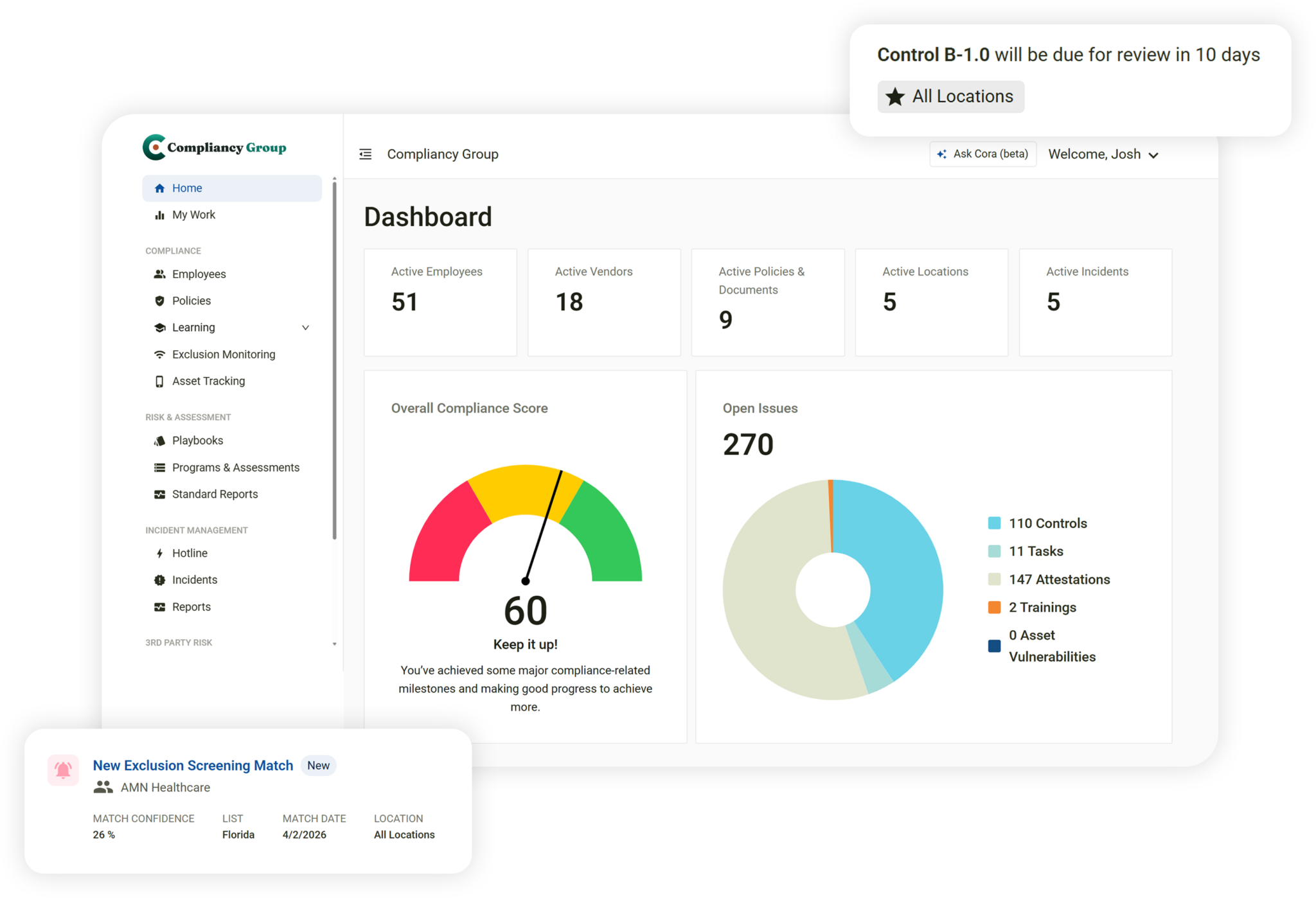
Compliancy Group shines as the ultimate choice for medical compliance management, leading the industry with our exceptional blend of expertise and innovation. With our comprehensive software solution and dedicated team of professionals, we help organizations navigate the intricate maze of regulations, ensuring that healthcare professionals remain fully compliant at all times.
Compliancy Group’s unparalleled commitment to customer success is evident in our personalized approach, tailoring strategies to fit each unique organization’s needs. By seamlessly integrating into existing workflows, our platform simplifies the complexities of compliance, enabling healthcare professionals to focus on what matters most; delivering exceptional patient care without any regulatory worries.