Pharmacy regulatory compliance is more complex than ever. With oversight from the DEA, FDA, state boards of pharmacy, and HIPAA requirements, pharmacies navigate a challenging web of regulations that demand constant attention and precise management.
The stakes are high. A single compliance violation can result in hefty fines, DEA registration suspension, license loss, or criminal penalties. Yet many pharmacies rely on manual processes, paper files, and spreadsheets that expose them to human error and dangerous compliance gaps.
This guide explores the essential components of pharmacy regulatory compliance and shows how modern compliance software like The Guard from Compliancy Group can transform your compliance program from an overwhelming burden into a streamlined, manageable process.
Understanding Pharmacy Regulatory Compliance
Pharmacy regulatory compliance means adhering to all laws, regulations, and professional standards governing pharmacy practice. This includes federal, state, and local requirements that regulate how medications are prescribed, dispensed, stored, documented, and billed.
Key Regulatory Bodies Overseeing Pharmacies
Drug Enforcement Administration (DEA): Enforces controlled substance regulations, including strict requirements for ordering, storage, dispensing, and recordkeeping. All providers handling controlled substances must maintain valid DEA registrations.
Food and Drug Administration (FDA): Oversees medication safety, labeling, manufacturing standards, and adverse event reporting requirements.
State Boards of Pharmacy: Implement region-specific laws that vary significantly across jurisdictions, determining licensure requirements, practice standards, and disciplinary actions.
Centers for Medicare & Medicaid Services (CMS): Establishes billing and reimbursement requirements for federal healthcare programs.
HIPAA: Requires comprehensive safeguards to protect patient health information from unauthorized access or disclosure.
The Five Pillars of Pharmacy Regulatory Compliance
1. Electronic Prescription Management
Electronic prescription services have become central to pharmacy compliance programs. The DEA requires strict protocols for e-prescribing controlled substances, including multi-factor authentication and secure transmission channels.
Key compliance challenges:
- Ensuring proper authentication protocols
- Maintaining secure transmission channels
- Verifying prescriber credentials
- Documenting electronic signature compliance
- Training staff on e-prescription workflows
2. Licensing and Credentialing
Pharmacists and pharmacy technicians must maintain current, valid licenses in every state where they practice. This becomes exponentially more complex for multi-location operations or telehealth pharmacies serving patients across state lines.
Critical requirements include:
- State licensing with standardized tests and law exams
- DEA registration (renewed every three years)
- Ongoing continuing education requirements
- Specialty certifications for compounding or advanced services
- Periodic recredentialing for board certifications
Manual tracking of license expirations, CE completion, and credential renewals creates significant compliance risk. A single lapsed license can result in practice suspension and legal liability.
3. Controlled Substance Compliance
Controlled substances face the strictest regulatory oversight due to abuse potential. The Controlled Substances Act categorizes drugs into schedules, each carrying specific handling requirements.
Essential compliance areas:
- Proper ordering and inventory management
- Secure storage meeting DEA security standards
- Accurate recordkeeping of all transactions
- Timely reporting of discrepancies or losses
- Staff training on handling protocols
- Periodic inventory reconciliation
Some states require daily reporting of controlled substances to state databases, including “zero reports” when no transactions occur. The MATE Act now requires eight additional training hours for DEA-licensed practitioners on substance use disorder screening and intervention.
4. HIPAA Privacy and Security
Pharmacies handle highly sensitive protected health information (PHI) daily and must implement comprehensive safeguards under HIPAA regulations.
Key HIPAA requirements:
- Physical safeguards for computer systems and hardware
- Technical controls including access restrictions, encryption, and audit trails
- Administrative procedures for workforce training and policy enforcement
- Minimum necessary PHI disclosure standards
- Patient consent for most non-clinical uses
- Business associate agreements with vendors
The HITECH Act extended HIPAA requirements to business associates and increased penalties for violations, making vendor management a critical compliance function.
5. Documentation and Audit Readiness
Maintaining accurate, complete documentation isn’t just good practice—it’s a legal requirement that can make or break an audit.
Essential documentation:
- Prescription verification records
- Inventory logs for controlled substances
- Staff training certificates and competency assessments
- Policies and procedures manuals
- Risk assessment documentation
- Incident reports and corrective actions
- Vendor and business associate agreements
Paper files, spreadsheets, and email chains create substantial compliance risk. When auditors arrive, scrambling to compile documentation from disparate sources wastes valuable time and exposes gaps in your program.
Why Traditional Compliance Methods Fall Short
Many pharmacies attempt to manage compliance using manual processes that create significant vulnerabilities:
- Spreadsheets lack automated reminders and audit trails
- Paper files are difficult to retrieve and can be lost
- Email communication scatters information across multiple inboxes
- Disconnected systems force duplicate data entry and inconsistency
These approaches consume enormous staff time while exposing your pharmacy to human error, missed deadlines, and compliance gaps that regulators will find.
Building an Effective Pharmacy Compliance Program
The Office of Inspector General (OIG) established seven fundamental elements for effective compliance programs. While initially developed for pharmaceutical manufacturers, these principles apply to all pharmacies:
- Written Policies and Procedures: Documented standards outlining compliance requirements and operational protocols
- Designated Compliance Officer: A focal point with authority and direct access to leadership
- Effective Training and Education: Comprehensive, role-specific training with regular refreshers
- Effective Communication: Open channels for reporting concerns without retaliation
- Internal Monitoring and Auditing: Regular assessments identifying gaps before violations occur
- Enforcement and Incentives: Consistent disciplinary standards plus positive recognition
- Prompt Response and Corrective Action: Immediate investigation and documented remediation
How The Guard Transforms Pharmacy Regulatory Compliance
The Guard from Compliancy Group is purpose-built healthcare compliance software that addresses every aspect of pharmacy regulatory compliance in one centralized system.
Comprehensive Compliance Dashboard
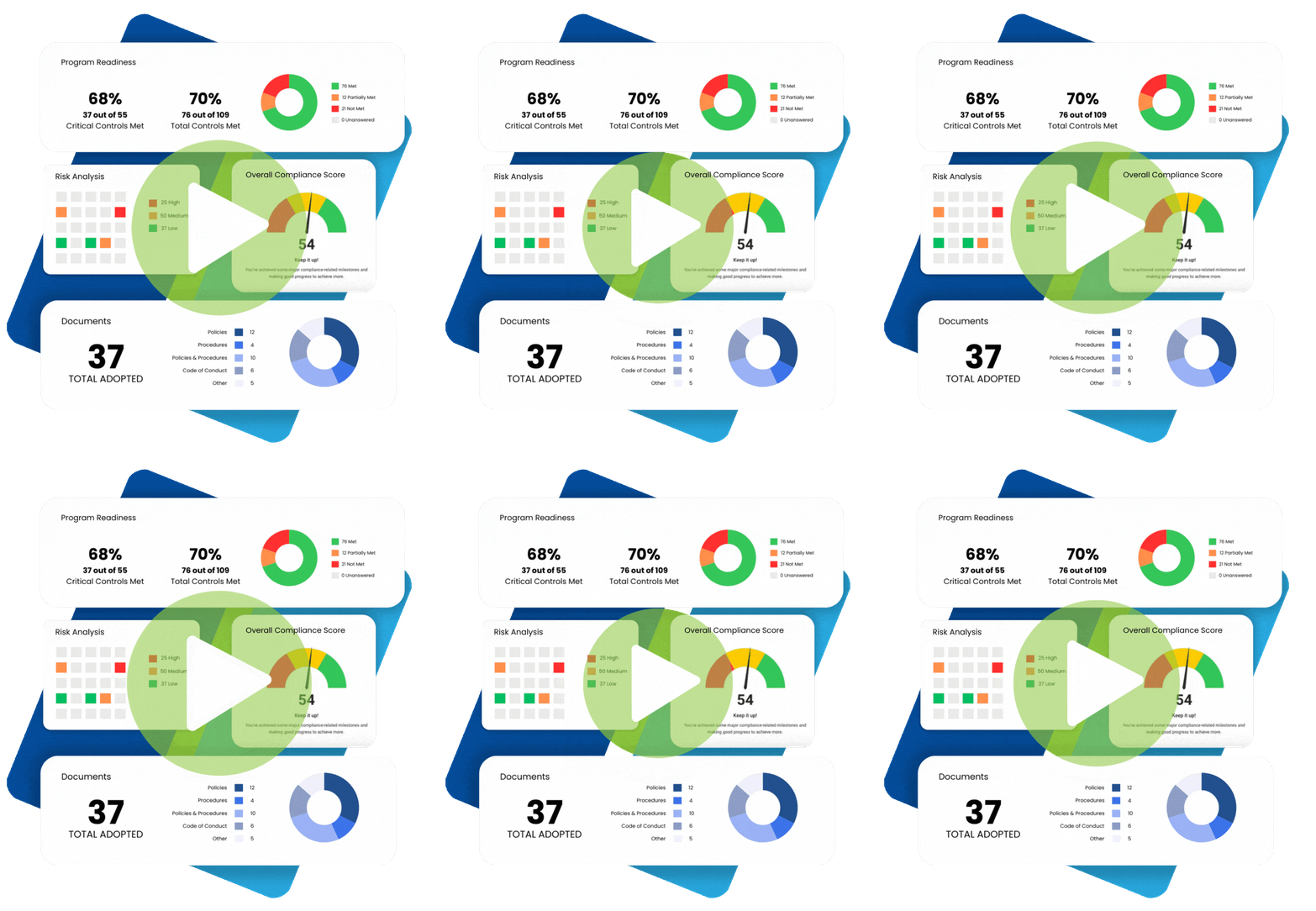
The Guard’s dashboard provides real-time visibility into your entire compliance posture. Track employee training, risk assessments, policy acknowledgments, vendor compliance, and more from a single screen with:
- Visual indicators showing what needs attention
- Automated notifications for upcoming deadlines
- Progress tracking across multiple compliance domains
- Customizable views for different user roles
Integrated Training Management System
The Guard includes 90+ courses covering HIPAA, OSHA, fraud, waste and abuse (FWA), controlled substances, and more.
Training features:
- Role-based course assignments
- Video-based courses using engaging SCORM and PsySec approaches
- Built-in quizzes verifying comprehension
- Automated certificate generation
- Completion tracking and training history
- Customizable courses for pharmacy-specific procedures
- Advanced learning paths for certifications
Policy and Procedure Management
The Guard provides 100+ ready-to-use policy templates that meet healthcare compliance requirements and can be customized for your pharmacy.
Key features:
- Template library covering all major regulations
- Version control tracking policy evolution
- Automated distribution with acknowledgment tracking
- Scheduled review reminders
- Approval workflows for updates
- 24/7 accessible centralized repository
Risk Assessment and Management
The Guard guides you through comprehensive risk assessments with yes/no questionnaires that identify vulnerabilities. When gaps are detected, the system automatically creates corrective action plans with:
- Guided assessment workflows
- Automated gap analysis
- Task assignment and tracking
- Progress monitoring
- Complete documentation for audits
- Risk scoring and prioritization
Incident Management and Reporting
When compliance incidents occur—medication errors, HIPAA breaches, workplace injuries—The Guard provides comprehensive tracking and resolution tools:
- Online reporting forms accessible from any device
- Anonymous reporting options
- Automated routing to appropriate personnel
- Investigation tracking and documentation
- Trend analysis identifying patterns
- Complete audit trails
Vendor and Contract Management
The Guard centralizes all vendor documentation and monitoring:
- Business associate agreement repository
- Contract expiration tracking with automated reminders
- Vendor risk assessment
- Compliance monitoring dashboards
Exclusion List Monitoring
The Guard automatically searches 55 federal and state exclusion lists monthly, cross-referencing against your employee and vendor databases. Immediate notifications ensure you can take corrective action before regulators discover violations.
State-Specific Compliance Made Simple
Pharmacy regulations vary significantly across states. The Guard accommodates these differences with:
- Configurable rules for state-specific regulations
- Automated alerts for state compliance deadlines
- Document templates customized for state requirements
- Training modules addressing state-specific laws
Real Results From Pharmacies Using The Guard
Pharmacies using The Guard report transformative results:
- Time savings: Compliance tasks completed in minutes instead of hours
- Reduced risk: Automated monitoring prevents missed deadlines
- Audit confidence: Comprehensive documentation always ready
- Staff efficiency: Centralized systems eliminate duplicate efforts
- Cost reduction: Streamlined processes reduce administrative overhead
As one pharmacy compliance officer noted: “I tried doing this on my own and it was so complex and time consuming it completely interfered with my ability to actually run my practice. The Guard helps us stay compliant so we can get back to seeing patients.”
The Cost of Non-Compliance
While compliance software represents an investment, the cost pales compared to potential violations:
- Civil monetary penalties reaching millions of dollars
- Criminal penalties for serious violations
- License suspension or revocation halting operations
- Exclusion from federal programs eliminating Medicare/Medicaid revenue
- Reputational damage eroding patient trust
- Increased audit scrutiny attracting ongoing regulatory attention
Beyond direct penalties, violations consume enormous staff time responding to investigations and implementing corrective actions.
Getting Started With The Guard
Implementation is straightforward. Professional and enterprise tier customers receive dedicated onboarding coaches who guide setup and configuration. The cloud-based system requires no downloads—simply log in and begin.
Implementation process:
- Initial setup and configuration
- User creation and role assignment
- Policy customization and distribution
- Training course assignment
- Risk assessment completion
- Ongoing support from Customer Success Managers
Essential tier customers receive comprehensive quick start guides for self-onboarding with support available via chat or email.
Take Control of Your Pharmacy Compliance Program
Pharmacy regulatory compliance doesn’t have to be overwhelming. The Guard from Compliancy Group provides purpose-built software addressing every aspect of compliance management in one intuitive platform.
Stop struggling with spreadsheets, paper files, and disconnected systems. Transform your pharmacy compliance program into a streamlined operation that protects your patients, staff, and business.
The Guard provides:
✓ Comprehensive training management
✓ Risk assessment and remediation tools
✓ Incident reporting and tracking
✓ Policy and procedure management
✓ Vendor compliance monitoring
✓ Exclusion list screening
✓ Audit-ready documentation
✓ Real-time compliance dashboards
Whether you’re a single-location independent pharmacy or a multi-state operation, The Guard scales to meet your needs while addressing your unique compliance challenges.
Ready to simplify pharmacy regulatory compliance? Learn how The Guard can transform your compliance program. Schedule a demo or start your free trial today.