Building a Culture of Accountability in Compliance



In many organizations, compliance feels like one person’s responsibility, and that person is often overwhelmed. But the truth is, a strong compliance program doesn’t rely on one champion. It thrives when accountability is shared across the entire team.

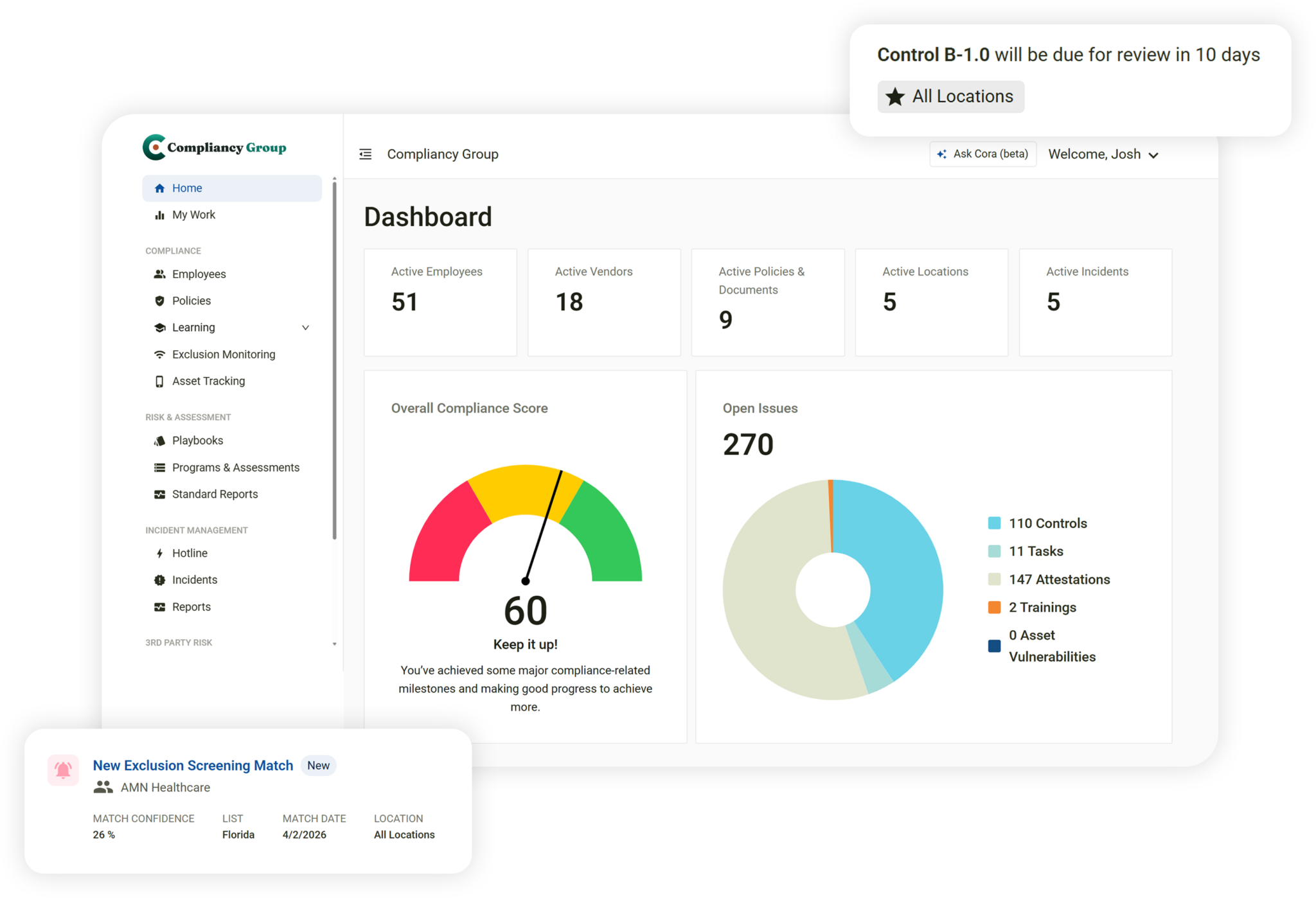

How to make compliance everyone’s job, not just yours.
Here’s how to shift compliance from a one-time task to a habit and create a culture where everyone plays a part:
1. Start with Role Clarity
Make it clear what each team member is responsible for, whether it’s completing training, reviewing policies, or managing vendor documentation. When expectations are vague, ownership disappears.
Tip: Use role-based assignments in your compliance platform so every person knows what’s required of them.
2. Make It Visible
When compliance tasks are buried in inboxes, they get ignored. Bring visibility into dashboards, team meetings, or department KPIs.
Tip: Share completion rates by department or location as transparency breeds accountability.
3. Tie It to Real-World Impact
Help your team understand why compliance matters. Tie training and documentation back to real risks: data breaches, audit penalties, patient trust.
Tip: Share short stories or case studies to make abstract rules feel real.
4. Automate the Nags (So You Don’t Have To)
If you’re chasing down training completions or missing documents manually, you’re carrying too much of the weight.
Tip: Let your platform send reminders, flag overdue tasks, and escalate as needed so the system holds people accountable, not just you.
5. Recognize Good Behavior
People respond to recognition. When individuals or teams complete compliance tasks on time or go above and beyond, celebrate it.
Tip: Call out top performers in team updates, meetings, or even with a simple thank-you message.
Final Thought
Compliance isn’t just a checklist, it’s a mindset. By making expectations clear, tracking progress visibly, and sharing ownership across the organization, you’ll build a culture that protects itself. One where compliance isn’t your burden—it’s everyone’s responsibility.