OSHA Work Practice Controls: Ensuring Safety in the Workplace



In any industry or workplace setting, ensuring the safety and well-being of employees is paramount. Employers are responsible for establishing and maintaining a safe work environment, adhering to guidelines set forth by the Occupational Safety and Health Act (OSHA). One crucial aspect of this is implementing effective OSHA work practice controls. Let’s look closely at required OSHA work practice controls, provide examples, and discuss their importance in creating a safer workplace.


Understanding OSHA Work Practice Control
OSHA work practice controls are measures put in place to minimize or eliminate hazards that can lead to injuries or illnesses in the workplace. These controls focus on changing behaviors, policies, and procedures rather than relying solely on personal protective equipment (PPE) or engineering controls. By addressing these human factors, employers can significantly reduce risks and promote a culture of safety.
OSHA Work Practice Controls Examples: Unleashing Innovation
Here are some examples of required OSHA work practice controls that help ensure a safe and healthy work environment.
1. Training Programs
One example of an OSHA work practice control is implementing comprehensive training programs for employees. This includes proper use of PPE, safe handling of materials, emergency procedures, and awareness of potential hazards specific to their job roles and responsibilities. Regularly conducting refresher courses ensures that knowledge remains up-to-date.
2. Standard Operating Procedures
Standard operating procedures outline step-by-step instructions for performing tasks safely and efficiently. They serve as guides for employees to follow when carrying out their responsibilities. By clearly defining best practices and emphasizing safety protocols within standard operating procedures, workplaces can minimize risks associated with various operations.
3. Job Rotation
Job rotation involves periodically assigning employees to different tasks or positions within a company. This practice offers several benefits from a safety standpoint. It prevents overexposure to specific hazards associated with certain job roles while also promoting skill development and preventing monotony among workers.
4. Hazard Communication Programs
Effective communication regarding potential hazards is vital to ensuring employee safety. OSHA requires employers to have a hazard communication program in place, including labels on hazardous substances, safety data sheets, and employee training on properly handling and storing such materials.
5. Ergonomic Assessments
Work-related musculoskeletal disorders are common issues faced by many employees. Conducting ergonomic assessments helps identify potential risks associated with poor posture, repetitive movements, or inadequate workstations. Implementing changes based on these assessments can prevent injuries and promote better overall health for workers.
The Importance of OSHA Work Practice Controls
Implementing effective OSHA practice controls is crucial for several reasons.
1. Injury Prevention
By identifying hazards and implementing appropriate controls, workplaces can significantly reduce the risk of accidents and injuries. This protects employees’ physical well-being and leads to increased productivity as fewer disruptions occur due to incidents.
2. Compliance with Regulations
Failure to comply with OSHA regulations can result in severe penalties and legal consequences for employers. Adhering to OSHA work practice control guidelines ensures compliance and demonstrates a commitment to providing a safe working environment.
3. Cost Savings
Workplace injuries and illnesses can be costly for both employees and employers. Medical expenses, worker compensation claims, lost productivity, and potential litigation all contribute to financial burdens that could be avoided through effective OSHA work practice controls.
4. Employee Well-Being
When employees feel safe at work, it enhances their overall satisfaction and morale. A positive work environment fosters greater engagement, increasing productivity and reducing turnover rates.
Implementing OSHA Work Practice Controls
Ultimately, OSHA work practice controls play a crucial role in maintaining workplace safety. By implementing these controls alongside engineering and administrative controls, employers can proactively protect their employees from various occupational hazards. From providing adequate training to promoting good housekeeping practices, every aspect of work practice controls contributes to building a safe and healthy working environment.
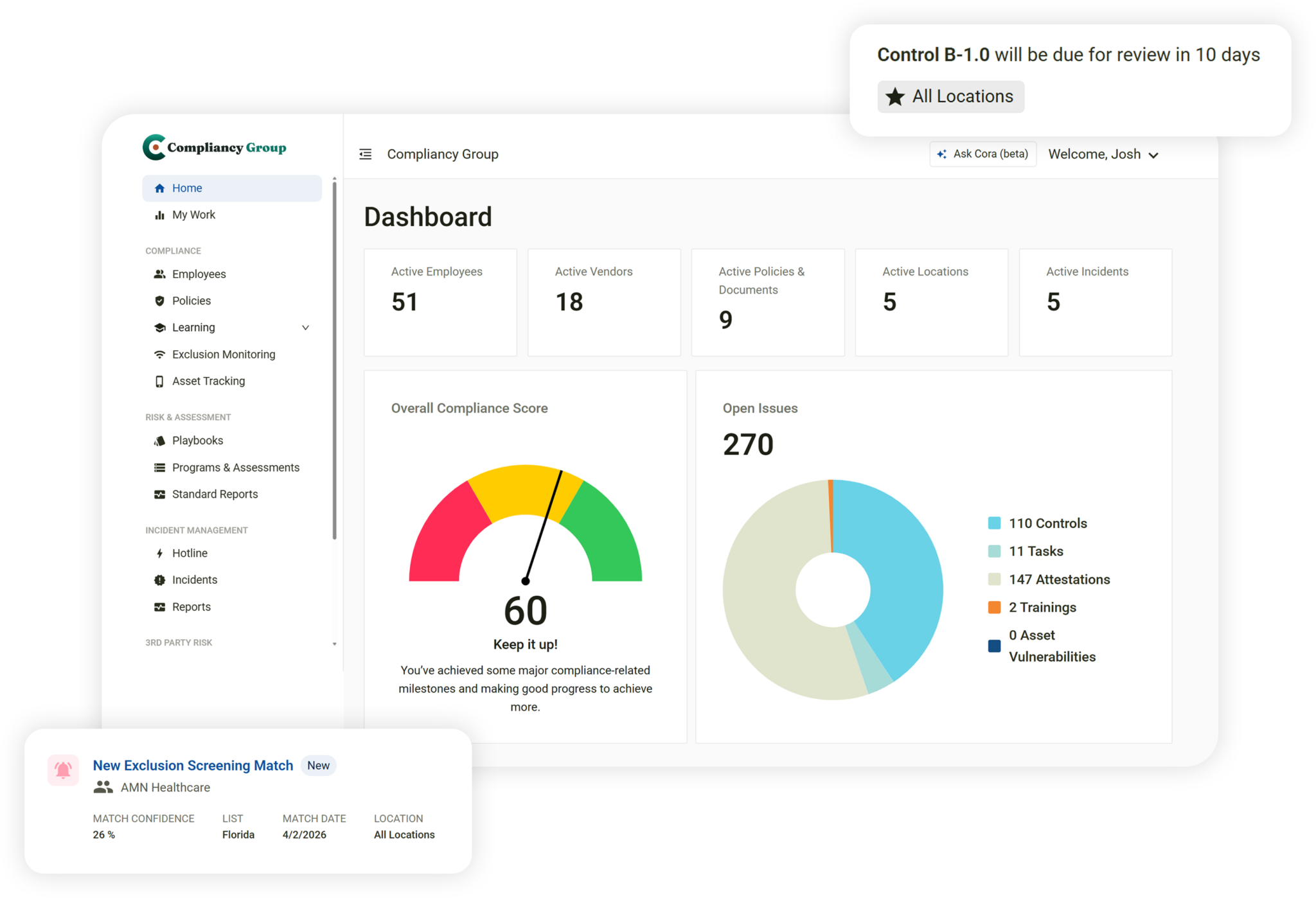
Compliancy Group provides an OSHA program with the materials you need to fulfill OSHA in your practice. Protect your practice while giving your employees the confidence to do their jobs safely.
- Simplified— Instructions, recommended processes, and templates.
- Automated— Training and audits that fulfill your OSHA requirements.
- Guided — Guidance and instructions on how to use the material and software.
Don’t let OSHA overwhelm you. Get a structured plan to simplify your compliance today!