What Exactly Is Healthcare Information Management?



Poor “human” security is the primary cause of most health records being compromised in the past few years. Human error is also a leading cause of data leaks. Most Healthcare Information Management (HIM) professionals know these errors are preventable, but not without a few essential elements such as customized training and policies. Acquiring these tools can be challenging for some organizations due to the difficulty of keeping up with industry changes, regulatory shifts, and internal needs that often fluctuate.

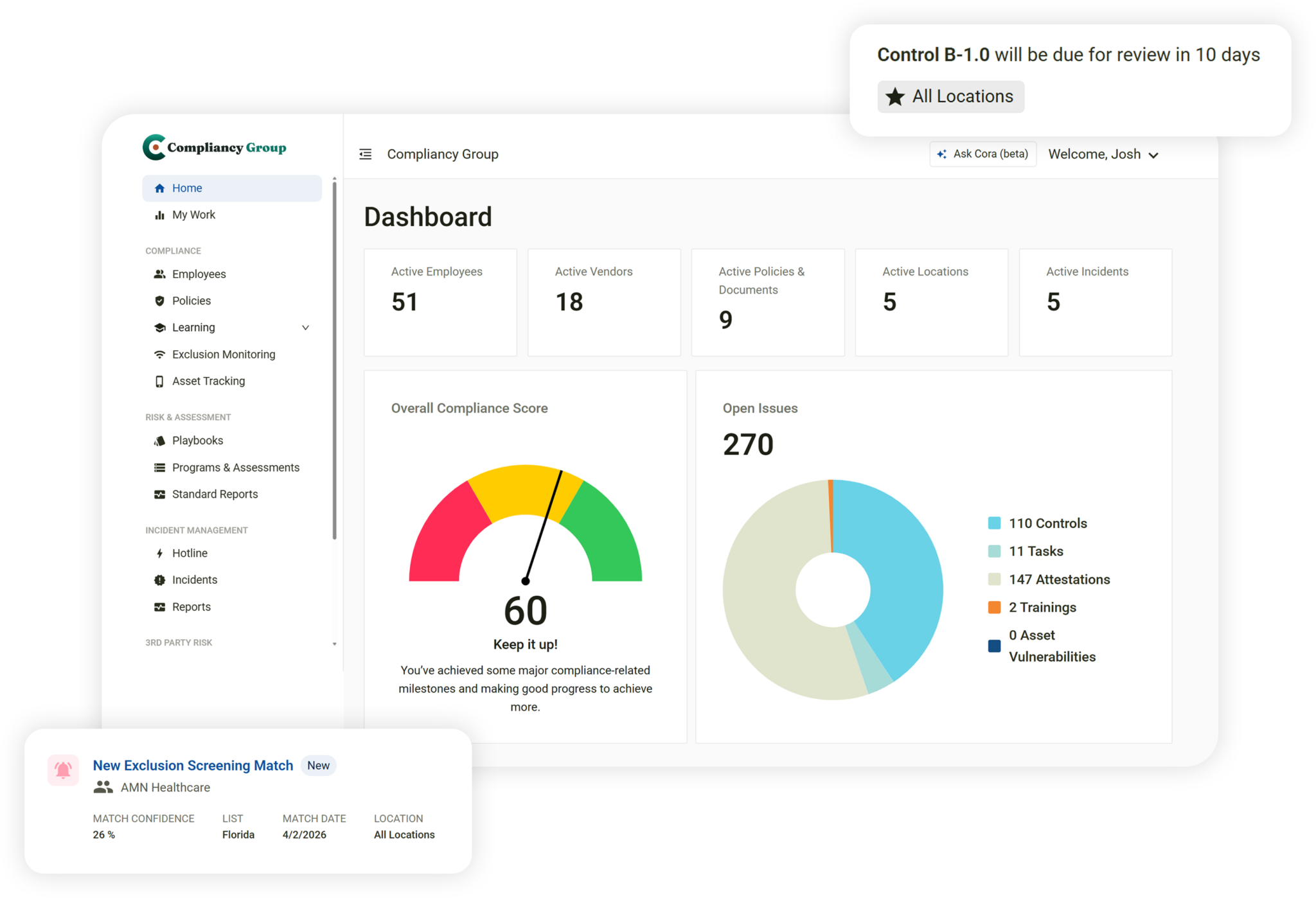

Using the right compliance software can help you access these tools and streamline how your team approaches data and documentation management. To determine what your healthcare organization needs, it’s best to form an understanding of healthcare management information systems and how they help organizations meet regulatory requirements and improve internal processes.
Understanding the Role of Healthcare Information Management in Compliance
What is healthcare information management? Essentially, it’s an analysis of the quality of patient healthcare information that has been collected, stored, and protected across different data collection systems. It refers to the comprehensive process of managing health data and medical records while ensuring accuracy, security, and consistent compliance.
This attempt at data and information protection utilizes both traditional and digital forms of medical information. Professionals who work in the space specifically focus on:
- Quality assurance
- Data accessibility
- Information security
- Data quality
- Data accuracy
How your organization approaches healthcare information management will directly affect the implementation of compliance efforts. HIM tactics combine multiple safeguards to enhance workflows and public protection from authentication and access controls for ePHI-specific policies and auditing practices.
A software solution that simplifies HIM while prioritizing compliance assurance will provide risk assessments, better risk management, policy templates, and better insight into an organization’s internal data.
How Would a Healthcare Organization Use Compliance Software to Approach HIMS?
Healthcare information management plays a critical role not only in streamlining operations, improving patient care, and safeguarding healthcare organizations from legal risks and reputational damage. Compliance software solutions make this easier by offering tools to ensure that all data is securely stored and properly accessed — and by the right people.
Healthcare information management isn’t just about storing patient data — it involves a much broader framework that includes setting up policies, customizing and deploying employee training, and implementing incident reporting systems to help an organization receive the best results from compliance efforts.
The right healthcare management information systems will ensure that your organization’s data is:
- Fully compliant with current healthcare regulations
- Up to date based on real-time reporting
- Less susceptible to being mishandled
- Easily accessed for reporting
- Able to enhance audit management
Using compliance software helps businesses properly align their training with industry compliance requirements. Additionally, businesses can easily deploy training modules for employees who handle sensitive data, which reduces administrative overload on compliance managers.
Choosing the Right Software to Compliment Your Healthcare Information Management Efforts
When navigating the management of your organization’s healthcare information efforts, consider the tools you use. Manual processes are time-consuming and contribute to avoidable errors, leaving more space for redundancies. In comparison, automating these processes helps establish a compliance-driven environment and streamline policy management and employee training.