What to Include in Your OSHA Policies and Procedures Manual



Regarding safety in the healthcare setting, it’s not just the patients that need our attention. Your employees also require safe working conditions that eliminate chemical exposure and other hazards that threaten their well-being. Although compliance issues regarding worker safety may seem complex, we clarify the Occupational Safety and Health Administration (OSHA) policies and procedures mandatory for healthcare settings.


A Review of OSHA Safety Policies and Procedures for Healthcare
While all industries have mandatory workplace safety standards, the healthcare sector has unique issues that require attention. What follows are the guidelines a healthcare OSHA policies and procedures manual should include.
Bloodborne Pathogens
Exposure to bloodborne pathogens through the skin, needle sticks, or other form of contact poses a significant risk of infection from HIV, hepatitis, and other diseases. To prevent exposure or mitigate the effects of an incident, employers must follow the OSHA Bloodborne Pathogen Standard, which includes the following actions:
- Proper hazard communication (explained below)
- Hepatitis B vaccinations
- Creating and carrying out exposure control plans
- Providing OSHA training
Safety measures against bloodborne pathogens include using needleless systems when possible, practicing proper hand hygiene, and training staff on safe sharps handling.
Emergency Preparedness
Healthcare OSHA policies and procedures must also outline an emergency plan to help your organization anticipate and respond to catastrophic events, such as disastrous weather, fires, terrorism threats, and other emergencies. According to OSHA, your emergency preparedness plan must include:
- Protocols for reporting crisis events
- Escape routes and evacuation instructions
- Procedures for critical staff who ensure continuity of operations before evacuation
- System for accounting for all personnel to ensure total evacuation
- Duties for staff who perform medical and rescue functions
- Complete contacts of individuals that employees can reach for additional information
Hazard Communication
Hazard communication refers to training and instructions about dangerous substances or chemicals with which workers may come into contact. OSHA safety policies and procedures for hazard communication include:
- Keeping a master list of chemicals and substances present in the facility
- Proper labeling of hazardous materials
- Material safety data sheets (SDS) with comprehensive information about all chemicals and substances
- Comprehensive OSHA training
- Written hazard communication program
Infection Control
Hospitals, medical practices, and other healthcare facilities must take adequate measures to prevent the spreading of diseases and infections. Infection control is the responsibility of everyone who works within the organization, and they need to be trained in the following:
- Proper hand hygiene
- Routine cleaning and disinfection
- Appropriate isolation or quarantine measures
- Proper disposal of contaminated waste
Personal Protective Equipment (PPE)
Employees who face potential exposure to workplace hazards need access to the appropriate PPE, such as eye protection, gloves, masks, respirators, and gowns. Staff must also receive adequate training in using, storing, and disposing of PPE.
Violence Prevention
Workplace violence can take many forms, such as physical attacks, sexual assault, harassment, threats and intimidation, cyberbullying, property damage, stalking, discriminatory violence, and verbal abuse. Healthcare organizations must follow OSHA policies and procedures to prevent instances of violence, including:
- Conducting regular risk assessments and audits
- Establishing safety measures, such as panic buttons and surveillance systems
- Training staff on de-escalation methods
Support for Complying With OSHA Safety Policies and Procedures
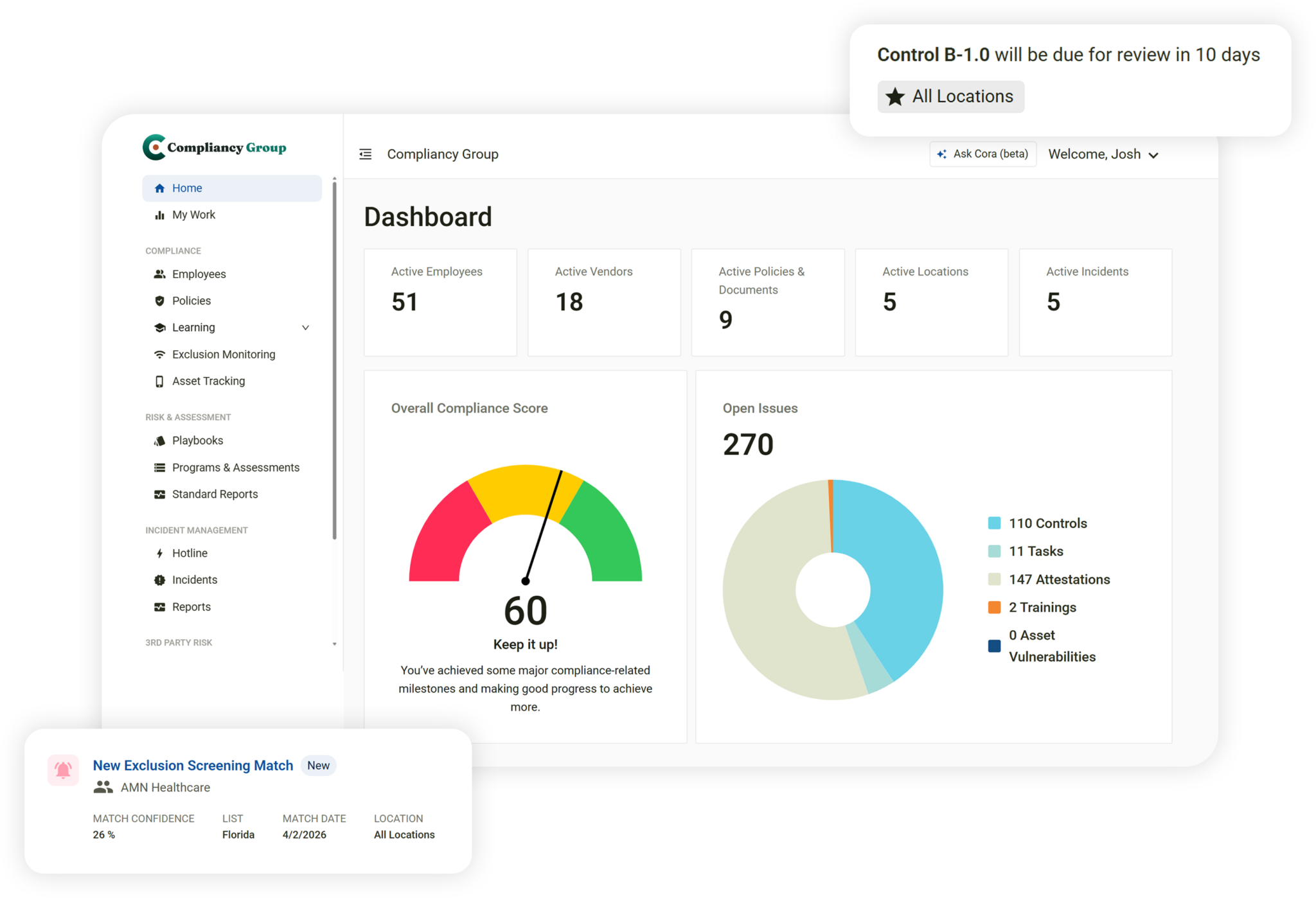
Even with a thorough understanding of your organization’s OSHA policies and procedures manual, maintaining compliance with the law can feel like a full-time job. With support from Compliancy Group, you have access to OSHA-specific software that helps you stay on top of regulations and keep all employees adequately informed. With our software, you can use templates to create policy and procedural documents that employees can access. It’ll also be easier to streamline your administrative functions and offer comprehensive OSHA training that staff can complete for continuing education (CE) credits.