The Hidden Costs of a Manual Compliance Program



When compliance is managed manually, it’s easy to overlook what it’s truly costing your business. Most organizations think they’re saving money by avoiding compliance automation tools—but in reality, they’re trading short-term savings for long-term risk, wasted hours, and costly oversights.
Here’s a breakdown of the real cost of doing compliance the hard way—and how centralized, compliance automation software like The Guard protects your bottom line while reducing risk.

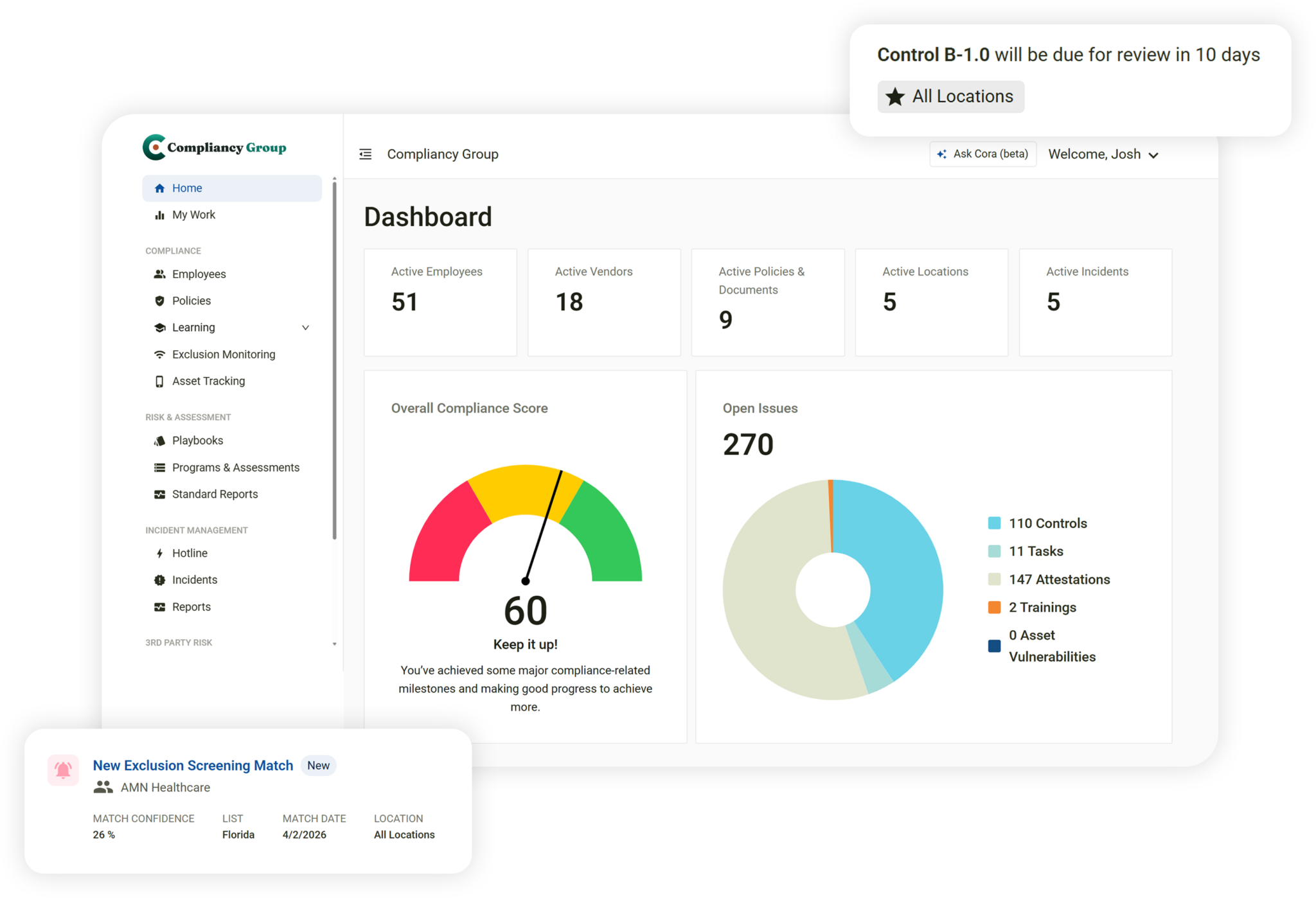

Why compliance automation isn’t a luxury—it’s a necessity.
1. The Labor Drain
Manual compliance eats up valuable staff time.
Chasing down training completions, updating spreadsheets, emailing reminders, printing policies—these tasks add up fast. For fast-growth organizations, every hour spent on admin is an hour taken away from high-impact work.
Estimated cost: 10–20+ hours per month per admin, often across multiple departments.
The ROI of automation:
With The Guard, these tasks are automated. Training is assigned by role, reminders go out on schedule, and documentation is centralized—saving hundreds of hours per year.
2. The Fire Drill Factor
You don’t realize how disorganized your documentation is… until you’re audited.
When records are scattered across inboxes, file shares, and spreadsheets, audit prep becomes a scramble. And in healthcare, a delayed or incomplete response can mean serious fines or penalties.
Estimated cost: Up to $60K+ in fines per violation, plus reputational damage and lost business.
The ROI of centralization:
The Guard consolidates all documentation—training logs, signed policies, risk assessments—into a single, audit-ready system. No scrambling. No stress.
3. The Cost of Human Error
Manual tracking = missed deadlines, expired agreements, and incomplete training.
It only takes one oversight to trigger a compliance failure. Manual systems make it easy to miss due dates or skip steps, especially across multiple locations or departments.
Estimated cost: Fines, corrective action plans, increased liability, and employee turnover.
The ROI of reliability:
Automated workflows in The Guard eliminate guesswork. Every requirement is tracked, deadlines are met, and alerts keep you ahead of risk.
4. The Growth Bottleneck
Manual systems don’t scale.
As your organization grows, manual compliance quickly becomes unmanageable. More locations, more staff, more complexity—without automation, every new hire multiplies the administrative burden.
Estimated cost: Lost efficiency, increased headcount needs, and inconsistent training.
The ROI of scalability:
With The Guard, you can scale your program across 2 or 200+ locations with ease. Role-based templates, automated onboarding, and centralized oversight make growth safer and smoother.
The Bottom Line
A manual compliance program may seem cost-effective on the surface—but it’s expensive under pressure. Automation isn’t just about efficiency—it’s about protecting your business.
With The Guard, you gain:
- Fewer hours spent on admin
- Lower risk of fines and violations
- Higher audit success rates
- Peace of mind that your program is always working